
Seven Turnkey Pasta Production Lines in Three Factories in Uzbekistan
Talia Makina has installed a total of six turnkey lines for three pasta producers in three different regions of Uzbekistan since 2014; the seventh line will be commissioned in September 2026. Across more than a decade of cooperation, the same customers have chosen Talia Makina again and again.
Three Factories at a Glance
Project Story
For many years Uzbekistan relied heavily on imported pasta; modern production lines installed by local investors have cut those imports, and today domestically produced pasta stands out on market shelves. Within this transformation, Talia Makina has carried out a seven-line turnkey programme across three factories in three different regions — six lines in operation and the seventh being commissioned in September 2026.
The first producer, an investor from outside Uzbekistan, entered the market with the first short-cut line installed in 2014; as its products took hold, it added a second short-cut line in 2016 and a spaghetti line in 2018, raising its capacity to 1,500 kg/h.
The second producer is a local flour mill; to turn its own flour and semolina into a value-added product, it invested in a 2,000 kg/h short-cut and a 750 kg/h spaghetti line in 2024. Today it also sells its own flour and semolina as pasta, holding shelf space with flour, semolina and pasta together.
The third producer earned a strong market position with a 500 kg/h short-cut line installed in 2021; the second line it ordered with export goals will be commissioned in September 2026.
The lines run with an AISI 304 food-grade stainless steel body and Siemens PLC-based automation; Schneider components were used in the first factory, Yaskawa components in the second and third. The short-cut lines produce a wide range of shapes led by penne cut, penne, square cut, fusilli, triple fusilli, elbow, noodles, vermicelli and orzo; the spaghetti lines produce spaghetti in 1.2 and 1.5 mm diameters.
The six lines in operation have a total installed capacity of 4,750 kg/h — theoretically up to 114 tonnes per day in 24-hour continuous operation. In every project, including the first line commissioned in 2014, remote support and spare parts supply continue uninterrupted even after the warranty period has ended. With turnkey installations in 18 countries since 2007, Talia Makina supports regional producers in switching to local production.
Project Overview
2021 and September 2026 (3rd factory)
2024 (2nd factory)
Turnkey Project Process
Project Results
Installed Line Views
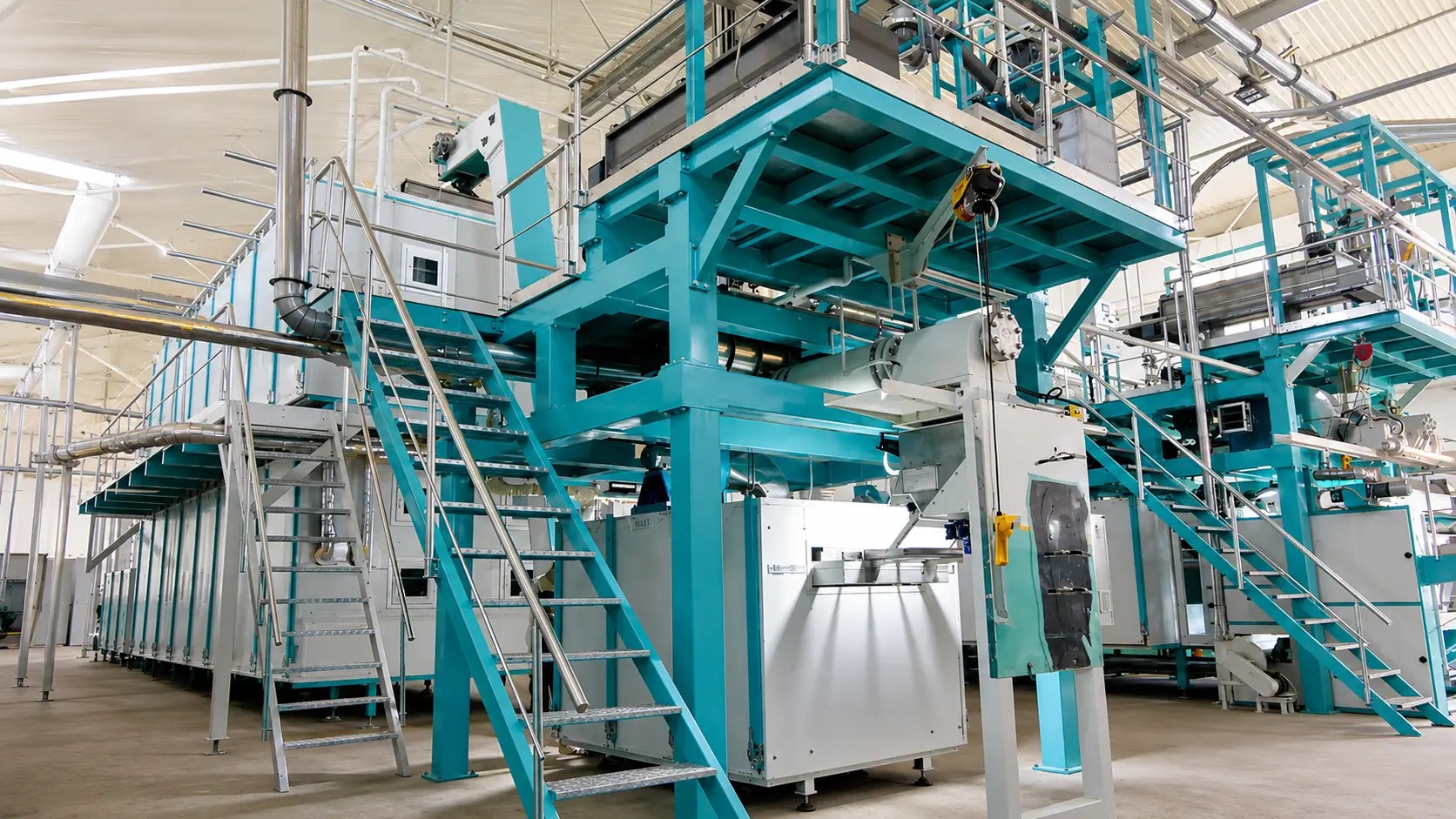
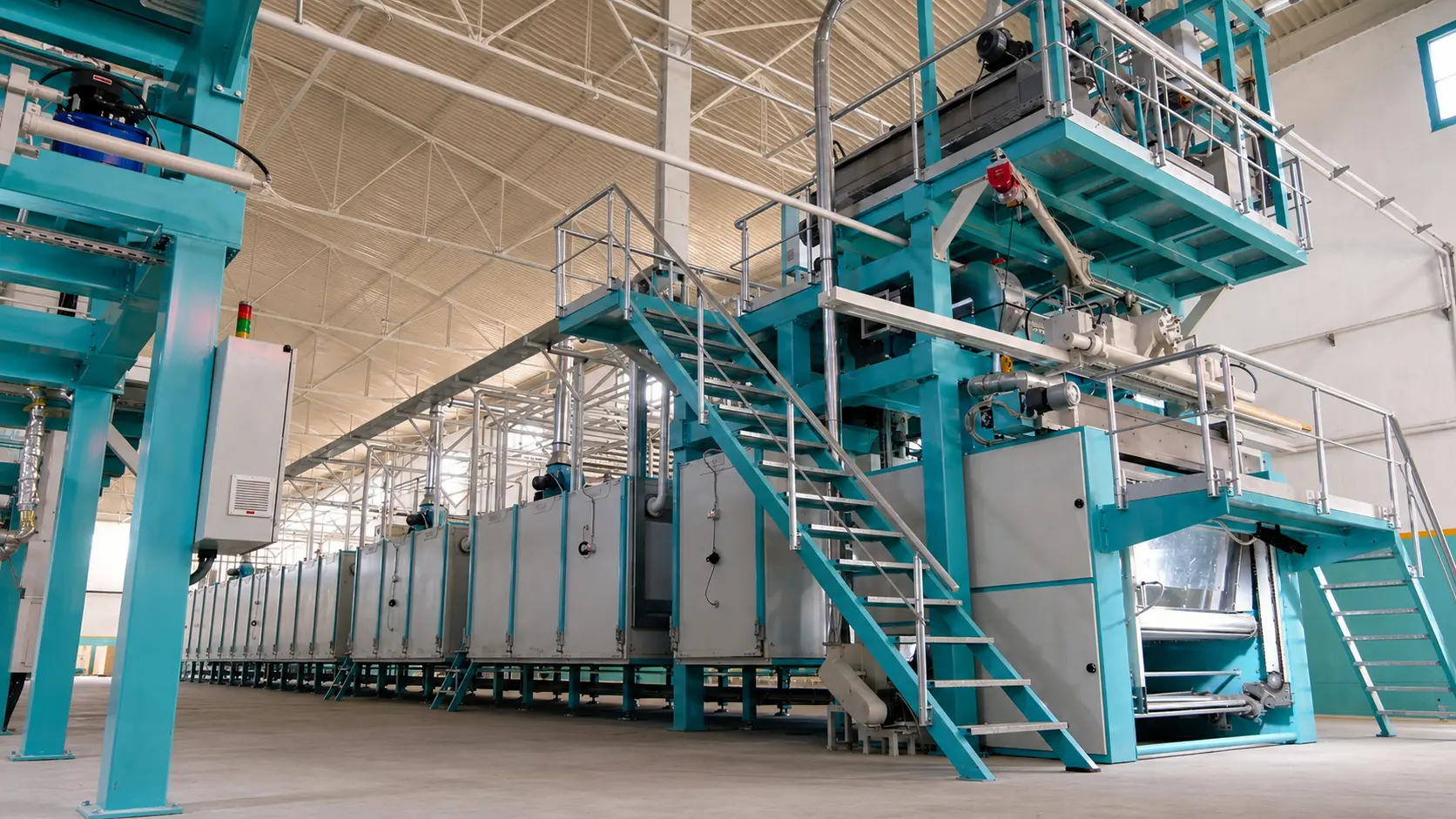
Hover over an image: large preview · Click: full-screen view with navigation. The images are from the first factory (2 short-cut + 1 spaghetti lines).
Installed Line View 1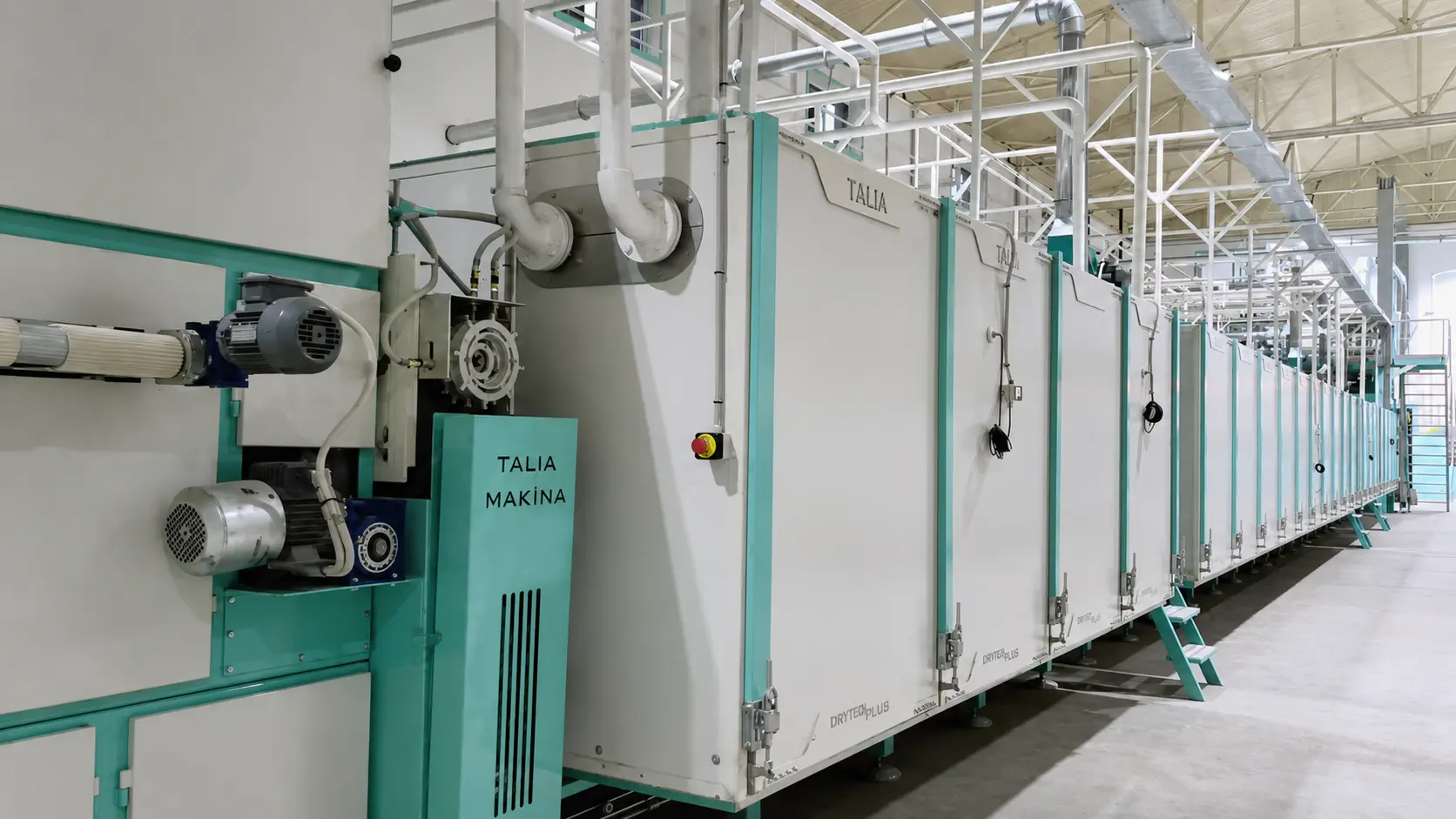 Installed Line View 2
 Installed Line View 3
Frequently Asked Questions
How is a pasta production line installed in Uzbekistan?
Project planning, line design, manufacturing, shipment, site installation, commissioning and operator training are carried out turnkey from a single source. This full scope was applied in all line installations in Uzbekistan.
What capacities were installed in Uzbekistan?
The first factory runs 2 × 500 kg/h short-cut and a 500 kg/h spaghetti line, the second factory a 2,000 kg/h short-cut and a 750 kg/h spaghetti line, and the third factory a 500 kg/h short-cut line — 4,750 kg/h of installed capacity in total. With the seventh 500 kg/h line to be commissioned in September 2026, the total will reach 5,250 kg/h.
Which pasta shapes are produced on the lines in Uzbekistan?
The short-cut lines produce a wide range of shapes led by penne cut, penne, square cut, fusilli, triple fusilli, elbow, noodles, vermicelli and orzo; the spaghetti lines produce spaghetti in 1.2 and 1.5 mm diameters. With circular die changes, more than 30 short-cut shapes can be produced on the same line.
Do customers invest with Talia Makina more than once?
Yes. The first producer in Uzbekistan commissioned three lines in 2014, 2016 and 2018; the third producer ordered its second line, to be commissioned in September 2026, after its first line in 2021. Repeat investment is the most concrete indicator of line performance.
Can a flour mill invest in a pasta production line?
Yes. The second producer in Uzbekistan is a local flour mill; it invested in pasta lines in 2024 to turn its own flour and semolina into a value-added product. Today it holds shelf space with flour, semolina and pasta together. For plants producing flour and semolina, a pasta line is a natural growth step thanks to raw-material integration.
How has domestic pasta production developed in Uzbekistan?
In Uzbekistan, where imports were high for many years, modern lines installed by local investors have cut imports; domestically produced pasta has come to the fore on market shelves. The lines installed by Talia Makina are part of this transformation.
What automation do the lines use?
All lines run on Siemens PLC-based automation; Schneider components were used in the first factory and Yaskawa components in the second and third. Automatic process and drying control is standard.
What do the warranty and after-sales support cover?
All lines are delivered with a 24-month standard warranty. In the Uzbekistan projects, remote support and spare parts supply continue uninterrupted even though the warranty periods have ended; maintenance planning and service requests are handled by the Talia Makina technical team.
Is remote technical support available?
Yes. The Siemens PLC-based automation system supports remote connection; with authorised access, fault diagnosis, parameter optimisation and software updates can be done remotely. This support is actively provided for all lines, including the first one commissioned in 2014.
Planning a pasta production line like the ones in Uzbekistan?
Talk to our team about capacity selection and line layout.