Long-Cut Pasta Production Line
Advanced Long-Cut PastaProduction Infrastructure
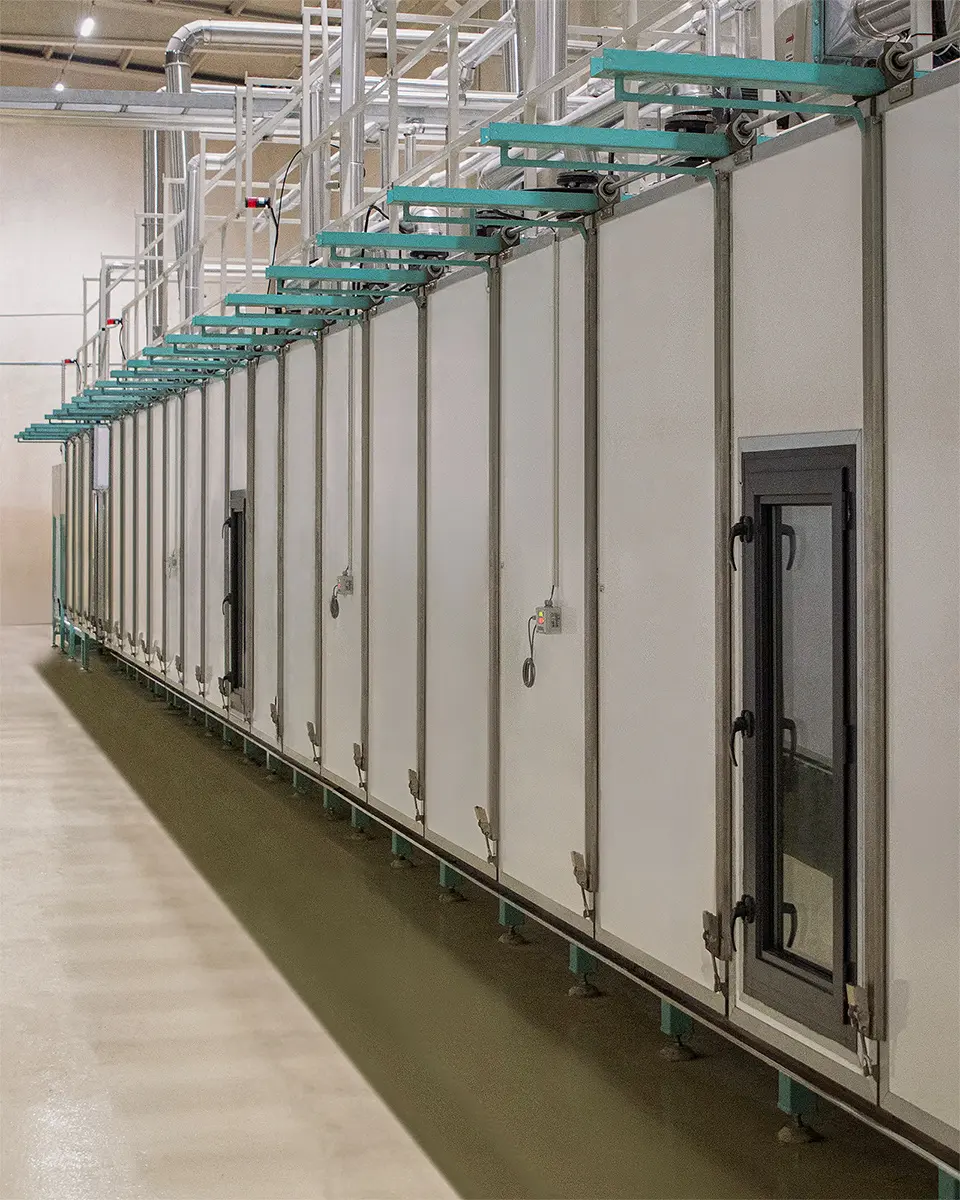
Stable Drying Technology for Spaghetti, Linguine and Long-Cut Pasta Production
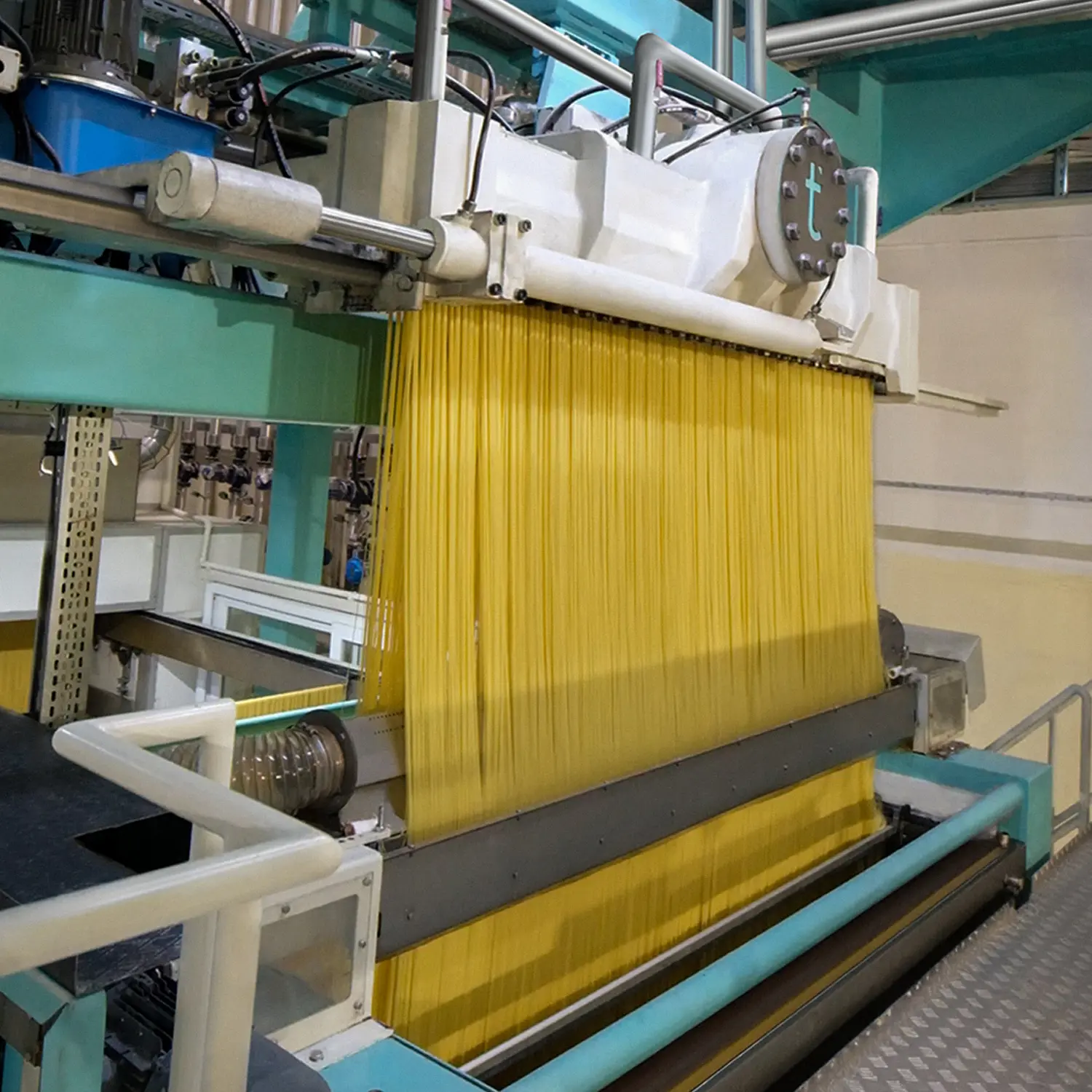
The modular long-cut pasta production line is engineered for stable and continuous production of spaghetti, linguine and similar long-cut pasta products.
The system operates with semolina or flour-based formulations depending on production requirements. Thanks to its multi-stage drying tunnel structure, dynamic air circulation control and PLC-based automation system, the line ensures homogeneous drying performance, reduced cracking risk and stable final product quality.
Each drying phase is controlled independently through temperature, humidity and airflow management to maintain product stability under different climate and raw material conditions.
Production capacities can be configured according to project requirements.
The system operates with semolina or flour-based formulations depending on production requirements. Thanks to its multi-stage drying tunnel structure, dynamic air circulation control and PLC-based automation system, the line ensures homogeneous drying performance, reduced cracking risk and stable final product quality.
Each drying phase is controlled independently through temperature, humidity and airflow management to maintain product stability under different climate and raw material conditions.
Production capacities can be configured according to project requirements.
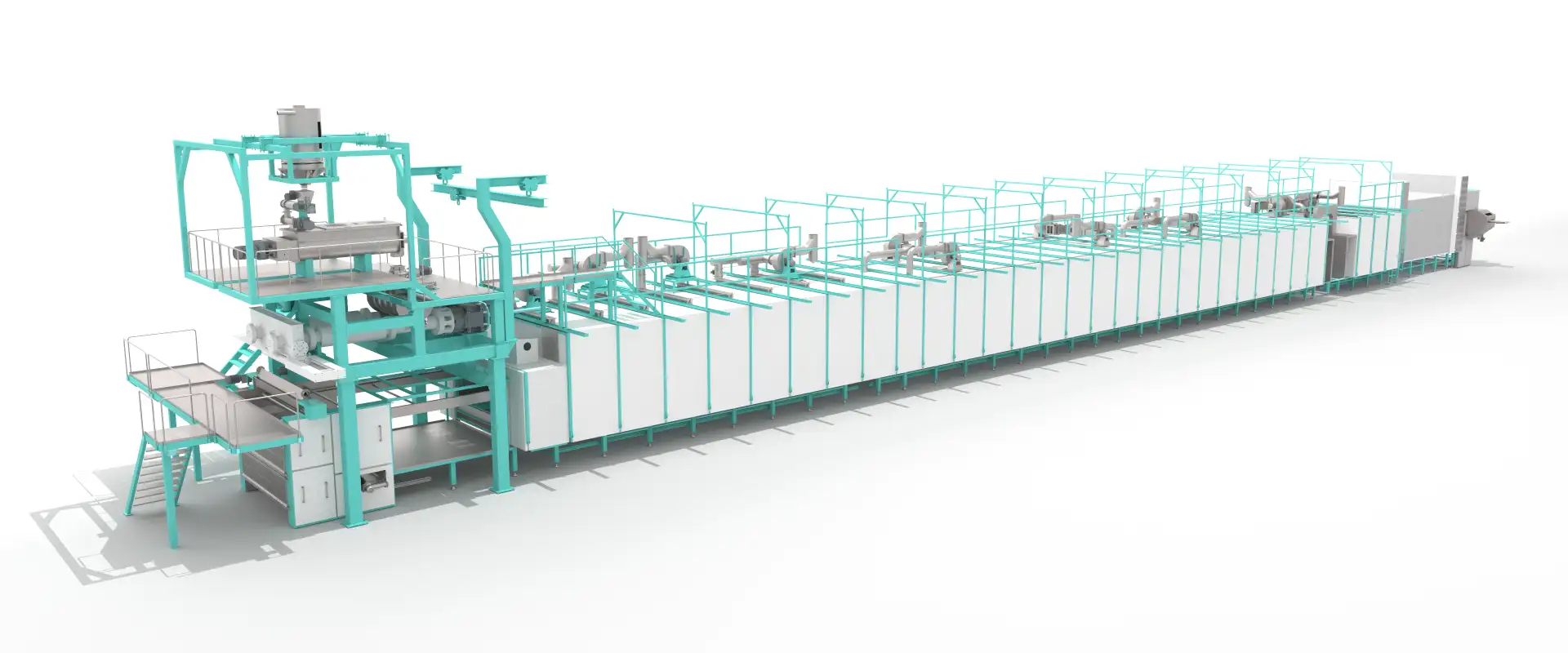
Production Process
Twelve steps from raw material to packaging
01
Raw Material Feeding
01 · Raw Material Feeding
Semolina or flour is fed to the line automatically from the silo.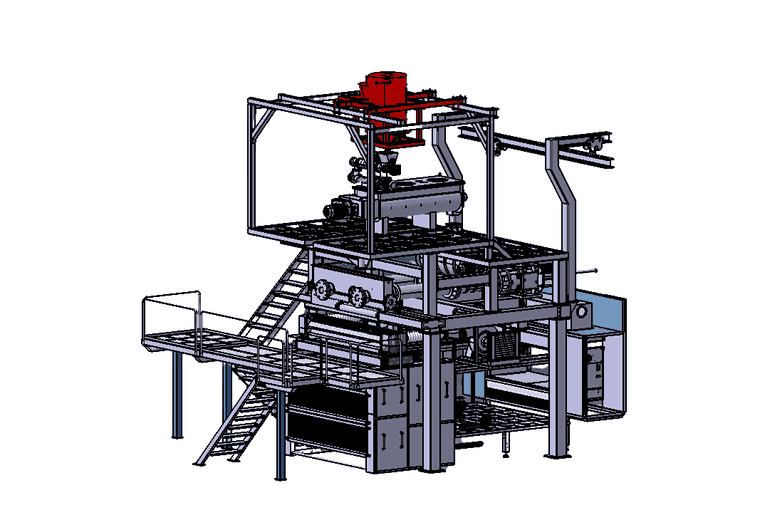
02
Dosing and Mixing
02 · Dosing and Mixing
A precision flour and water dosing unit ensures homogeneous dough preparation according to the recipe.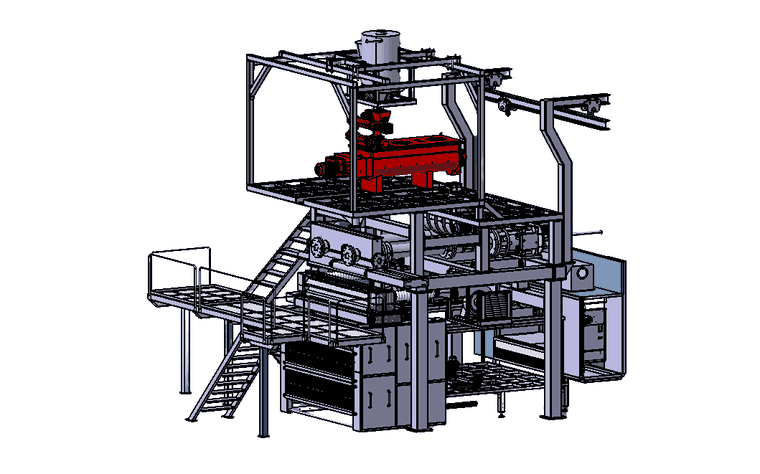
03
Vacuum Extrusion Press
03 · Vacuum Extrusion Press
The dough is prepared under stable pressure in an air-free environment; bubble-free, homogeneous structure.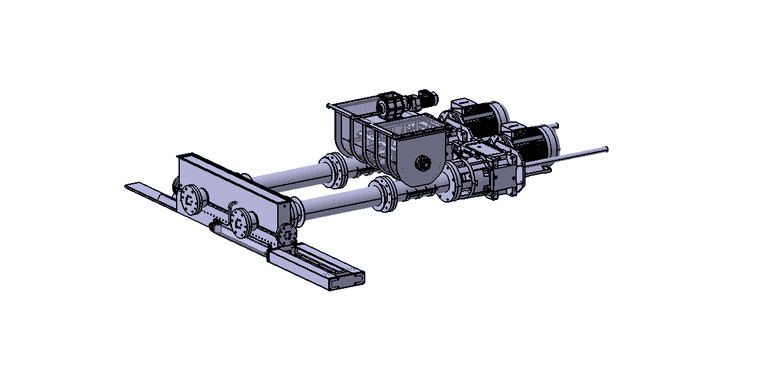
04
Spreading (Hanging)
04 · Spreading (Hanging)
The extruded product is spread onto the drying sticks evenly and at equal length.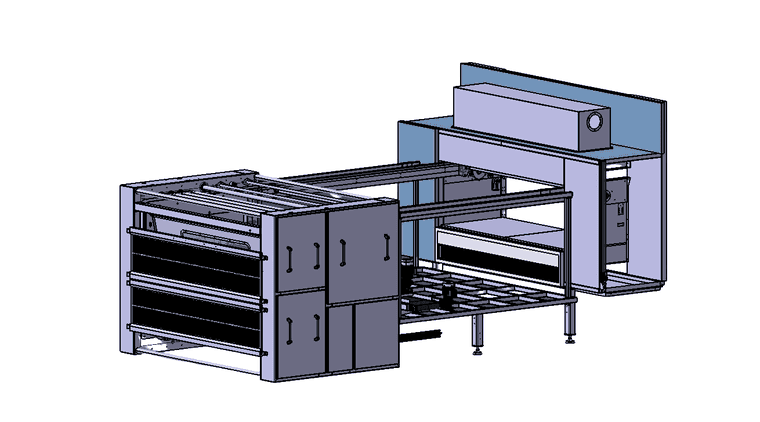
05
Pre-Cutting
05 · Pre-Cutting
A synchronized automatic knife system cuts the product to stick length.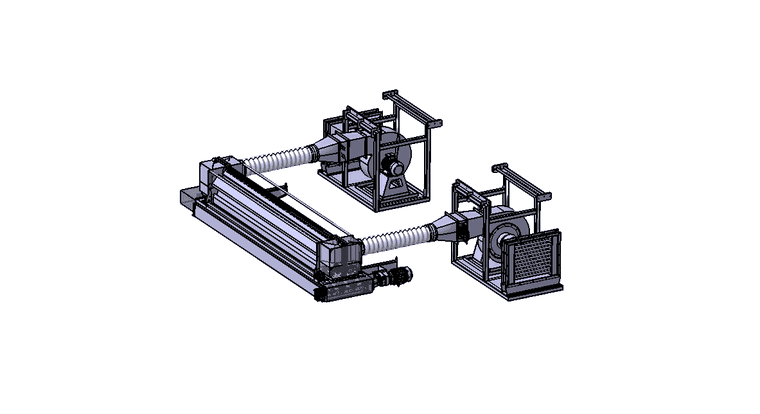
06
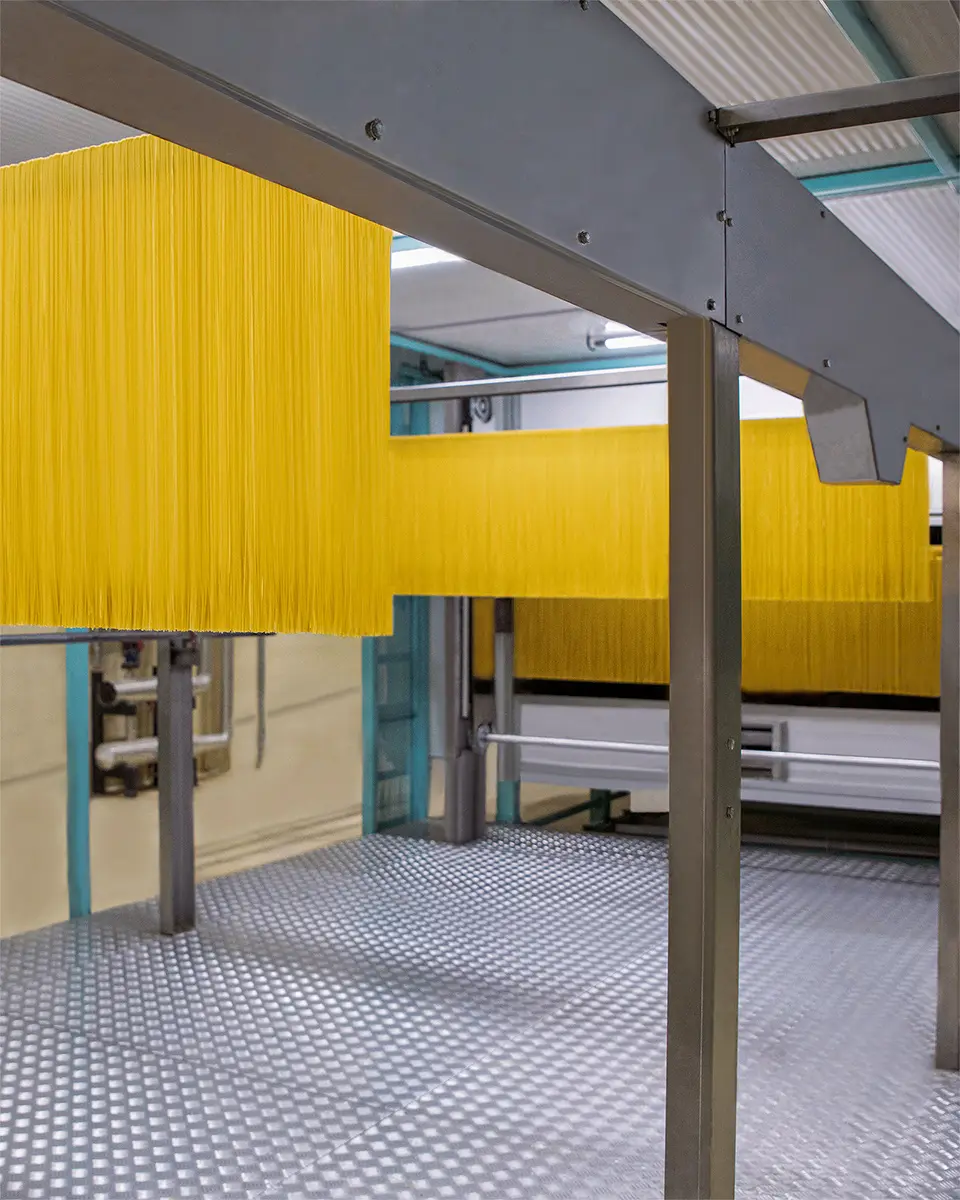
Pre-Drying
06 · Pre-Drying
Surface moisture is removed rapidly, stabilizing the product form.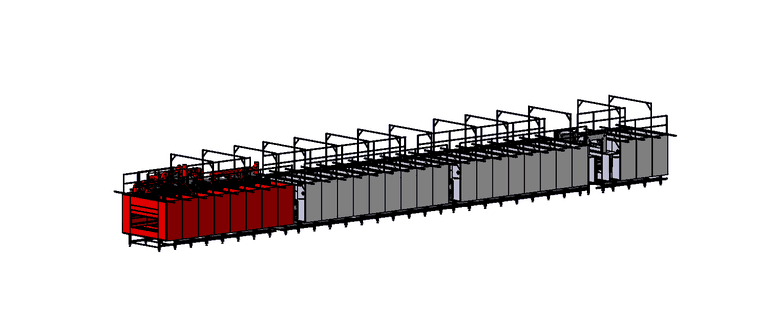
07
Main Drying Tunnel
07 · Main Drying Tunnel
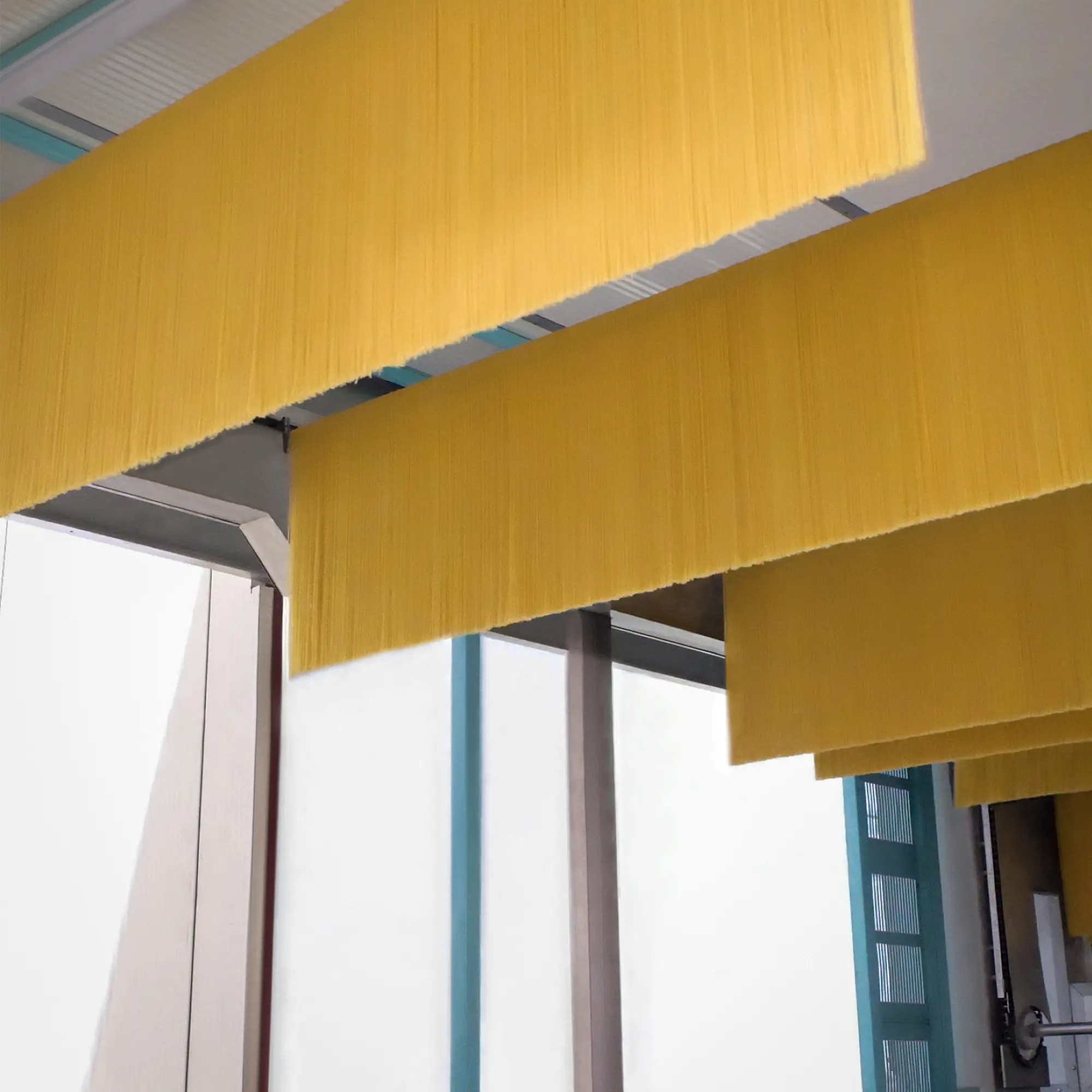
Homogeneous drying with zonal climate control in a multi-stage tunnel.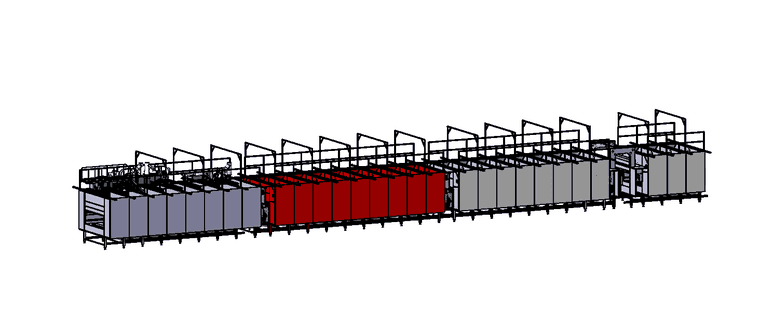
08
Stabilization
08 · Stabilization
Internal moisture and stresses are balanced; glassy brittleness is prevented.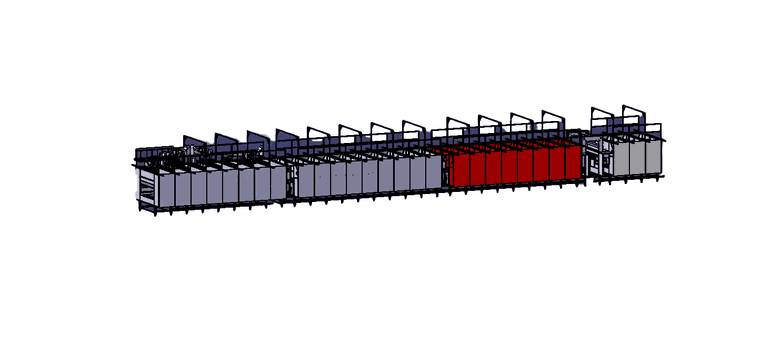
09
Cooling
09 · Cooling
A controlled cooling section gradually lowers the product temperature.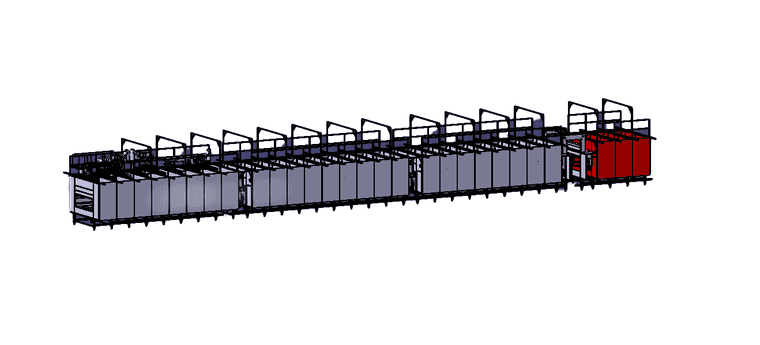
10
Silo / Stick Holding Area
10 · Silo / Stick Holding Area
The product is stocked before packaging; production and packaging become independent.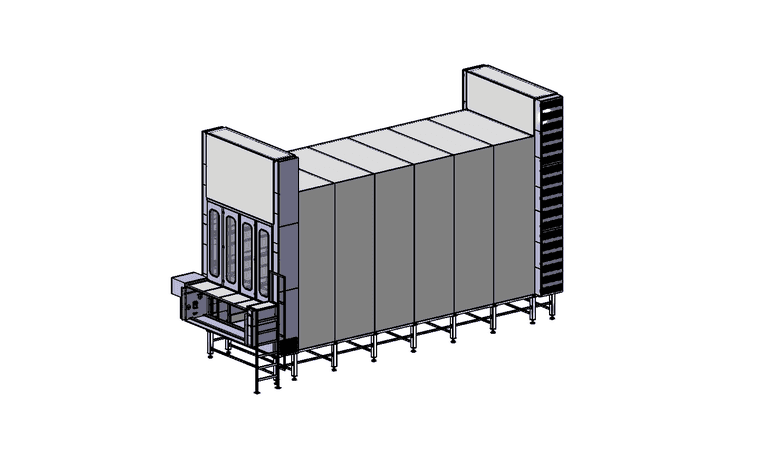
11
Final Cutting
11 · Final Cutting
The synchronized final cutting unit prepares the final product length.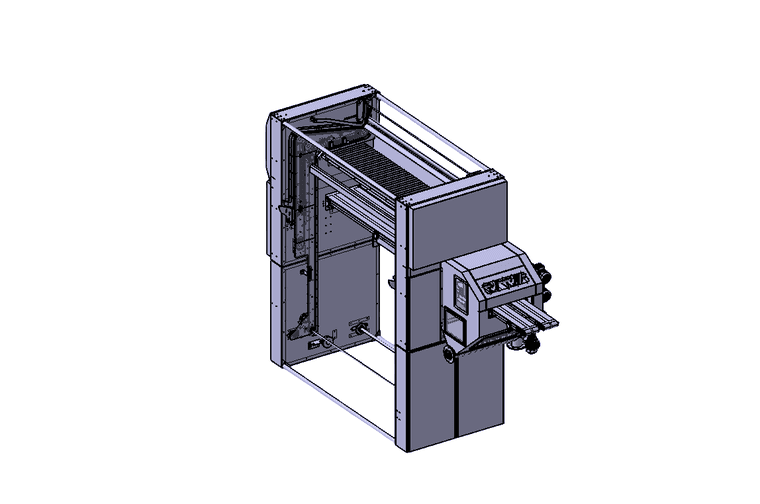
12
Packaging (optional)
12 · Packaging (optional)
Fully automatic integration with horizontal flow-pack systems.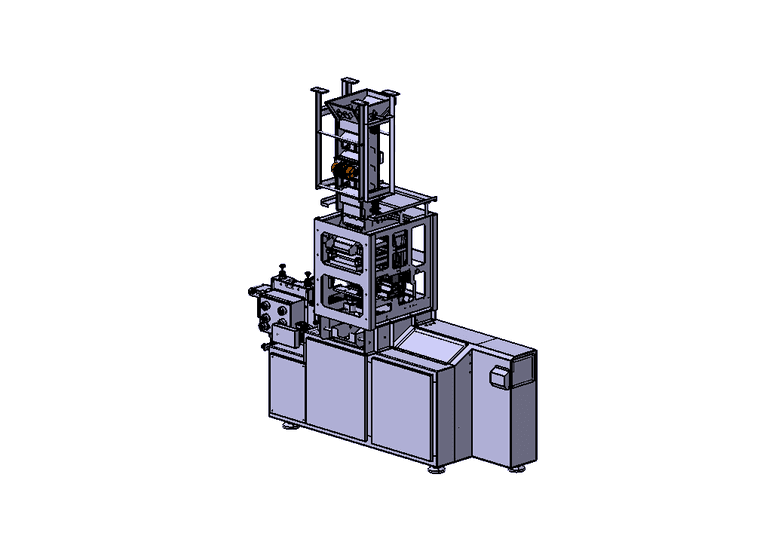
13
Complete Line
13 · Complete Line
All units from raw material feeding to packaging; a single PLC-controlled integrated long-cut (spaghetti) line.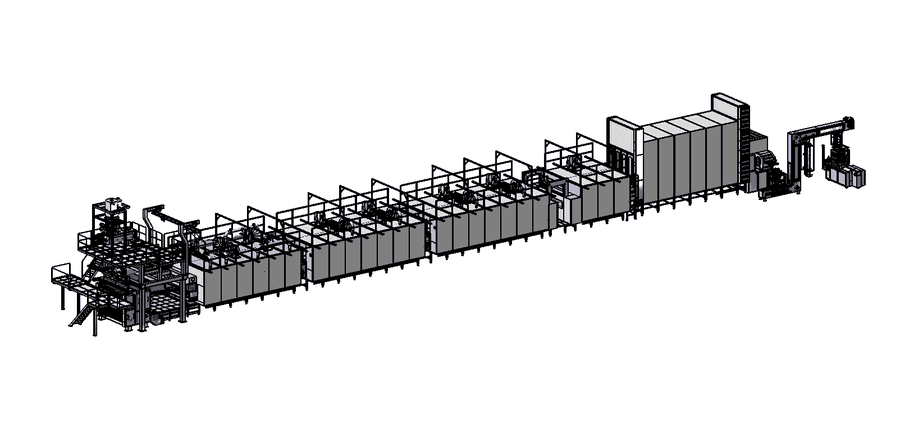
Technical Specifications
Our long-cut pasta production lines are engineered in six standard capacity options.
| Capacity options | 500 kg/h1,000 kg/h1,500 kg/h2,000 kg/h3,000 kg/h4,000 kg/h |
|---|---|
| Cutting length | 23 – 26 cm in the final package — adjusted to the customer's final product requirements |
| Products | Spaghetti, linguine and similar long-cut pasta |
| Automation | PLC-based fully automatic production with multi-level drying control |
| Operation | 24/7 continuous industrial production |
| Raw material | Semolina or flour-based recipes |
| Warranty | 24-month standard warranty |
Frequently Asked Questions
What capacities are available for the long-cut pasta line?
Our lines are engineered in six standard capacities: 500, 1,000, 1,500, 2,000, 3,000 and 4,000 kg/h. The right capacity is defined together with you based on your target market and investment plan. For a first capacity estimate, you can use our Investment Guide & Capacity Calculator. The entry capacity most often chosen by investors starting from scratch is 500 kg/h; once a first line has proved itself, the step producers most often take is 1,000 kg/h. We have a detailed page for each: 500 kg/h pasta production line (13 lines in 7 countries) and 1,000 kg/h pasta production line (8 projects in 6 countries).
What is the spaghetti cutting length?
The cutting length in the final package is between 23 and 26 cm and is adjusted according to the customer's final product requirements.
Can the line run continuously?
Yes. Our lines are designed for 24/7 continuous industrial production with PLC-based automation and multi-level drying, and are manufactured to European standards.
How is the right capacity of a pasta production line determined?
Line capacity is not selected based on hourly output alone. Annual sales targets, shift patterns, number of working days, planned downtime, product mix, die-change frequency, packaging capacity and future growth plans are evaluated together. The right capacity is defined according to a production scenario built on this data.
Can short-cut and long-cut pasta be produced on the same line?
Short-cut and long-cut products have different forming, conveying and drying requirements, so dedicated lines are generally used in industrial production. Both lines can be designed as an integrated factory project, taking raw material feeding, utilities, automation infrastructure and the packaging plan into account.
How do semolina or flour properties affect line design and product quality?
The raw material's particle size, moisture, protein and gluten structure and colour properties affect water dosing, mixing behaviour, extrusion pressure and the drying recipe. The line must be configured by evaluating the raw material and the targeted final product together. In projects with high raw material variability, a wide process adjustment range is particularly important.
How is the drying recipe defined?
The drying recipe is built according to product shape, wall thickness, raw material properties, initial moisture, target final moisture and ambient conditions. Temperature, relative humidity, airflow and time are managed together across the pre-drying, drying, stabilisation and cooling stages. Product-group-specific parameters are defined instead of using a single recipe for all products.
What processes does a turnkey pasta production line cover?
The project scope is defined across raw material feeding and dosing, mixing, vacuum extrusion, forming or cutting, pre-drying, drying, stabilisation, cooling and product transfer stages. Silo systems, packaging, utilities and in-plant connections are included according to the investor's needs. Clearly defining delivery limits in the offer is important.
What building and infrastructure information should be prepared?
For the layout study, the building's net dimensions, column positions, floor and ceiling heights, floor load capacity, entry openings and storage areas must be known. Electricity, thermal energy, compressed air, process water, drainage and ventilation infrastructure are also evaluated. Required consumption and connection values are finalised per project after the line configuration is selected.
What parameters does PLC automation manage on the production line?
The PLC-based control system manages the coordinated operation of the dosing, extrusion, cutting, conveying and drying sections. Temperature, relative humidity, airflow, motor status and process alarms can be monitored from the operator screen. Recipe management and logging level are configured according to the project's automation and traceability needs.
How is the line's energy consumption calculated at the offer stage?
There is no single energy figure applicable to all lines. Capacity, product type, drying cycle, heating source, ambient conditions, operating time and auxiliary equipment directly affect the calculation. Electrical and thermal energy requirements are prepared per project based on equipment loads and process requirements once the line configuration is defined.
How are installation, commissioning and line acceptance carried out?
The process proceeds through site readiness checks, mechanical and electrical installation, equipment checks, dry-run tests, production trials and process adjustments. Operator training covers operation, recipe use, cleaning and basic maintenance. Capacity, product quality and acceptance criteria are evaluated according to the technical scope agreed at project start.
How are the maintenance plan and critical spare parts list created?
The maintenance plan is prepared according to equipment operating hours, production intensity, product changeover frequency and site conditions. Wear parts, sensors, drive elements and process-critical components are evaluated separately. Keeping the recommended spare parts on site for the initial operating period helps reduce the risk of unplanned downtime.
What information is required to prepare a technical offer?
For a sound technical offer, the target hourly or annual capacity, products to be manufactured, raw material, shift plan, building dimensions, available energy sources, desired automation level and delivery scope should be shared. Packaging, silo, laboratory or utility requirements should also be added to the initial data.
Countries Where We Installed This Line
Ready to Start Your Pasta Production Project?
Discuss capacity selection and line layout for a turnkey long-cut (spaghetti) line with our team.
Industrial Long-Cut Pasta Production Line Gallery
Production details from Talia Makina industrial pasta production facilities.