
Three Turnkey Pasta Production Lines in Two Factories in Afghanistan
Talia Makina installed a total of three turnkey lines for two different pasta producers in Afghanistan: a 500 kg/h short-cut line in 2015, a 500 kg/h spaghetti line in 2018 and a 1,000 kg/h spaghetti line in 2019. Despite challenging logistics, every installation was completed as planned.
Two Factories at a Glance
Project Story
In Afghanistan, one of Central Asia's developing pasta markets, two different food producers chose Talia Makina for their pasta investments. The first producer entered the market from scratch with a 500 kg/h short-cut line installed in 2015; building on the success of its products, it commissioned Talia Makina again in 2019 for a 1,000 kg/h spaghetti line. A repeat investment by the same customer is the most concrete proof of line performance and partnership.
The second producer started domestic spaghetti production in Afghanistan with a 500 kg/h spaghetti line commissioned in 2018, opening the way for local production on shelves dominated by imports.
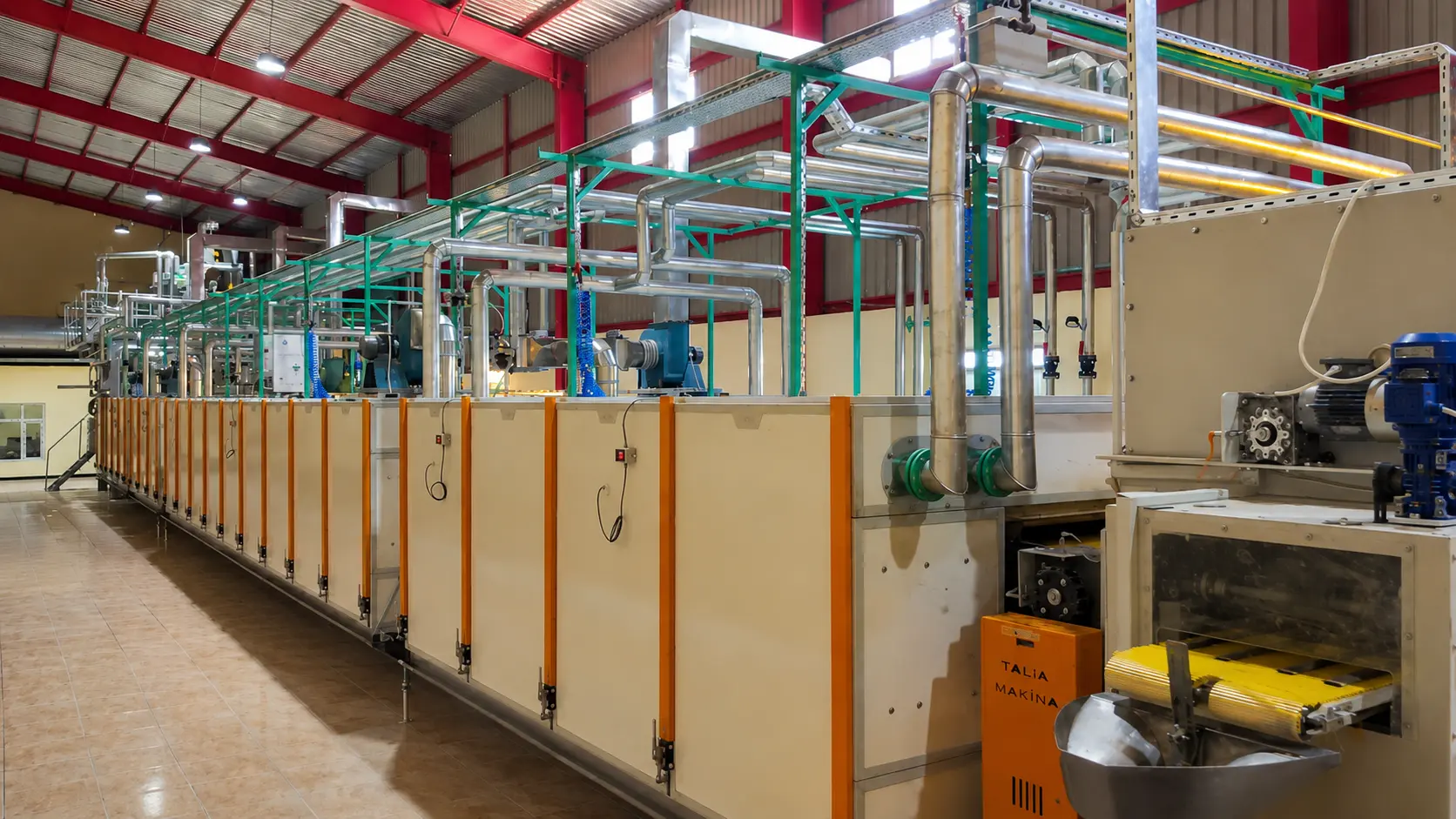
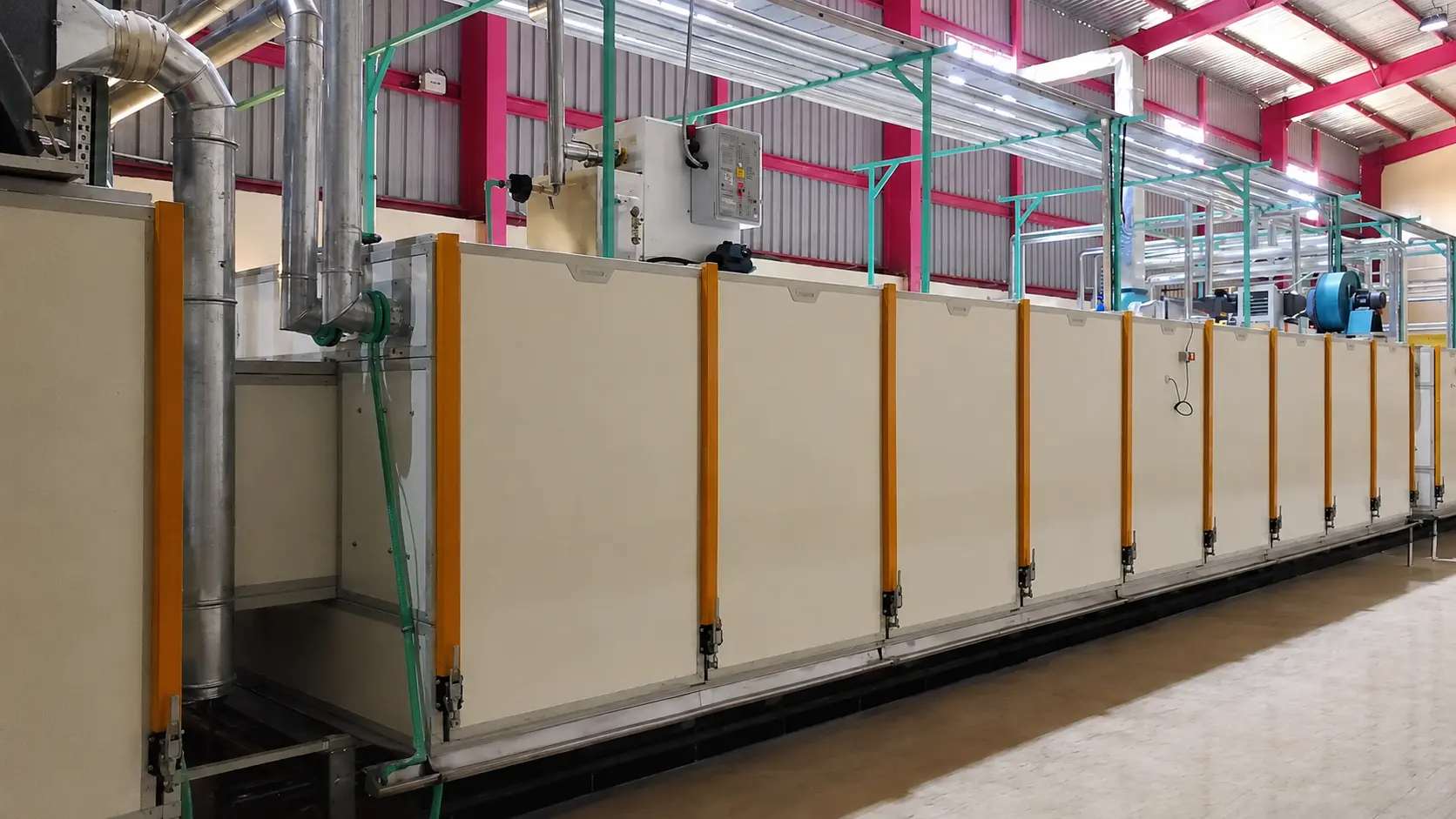
The projects required a demanding logistics operation — a landlocked geography, long shipping routes and challenging site conditions — yet shipment, site installation and commissioning were completed as planned. In both factories, space-specific engineering was applied: line layouts were designed compactly around the existing building dimensions.
The lines run with an AISI 304 food-grade stainless steel body and Siemens PLC with complete Siemens automation components. The short-cut line produces penne cut, penne, square cut, fusilli, noodles, vermicelli, orzo, elbow and triple fusilli; the spaghetti lines produce spaghetti in 1.2 and 1.5 mm diameters. Total installed capacity is 2,000 kg/h — theoretically up to 48 tonnes per day in 24-hour continuous operation. With turnkey installations in 18 countries since 2007, Talia Makina supports regional producers in switching to local production.
Project Overview
2018 and 2019 (spaghetti lines)
Turnkey Project Process
Project Results
Installed Line Views
Hover over an image: large preview · Click: full-screen view with navigation. The images are from the second factory's installation, commissioned in 2018.
Installed Line View 1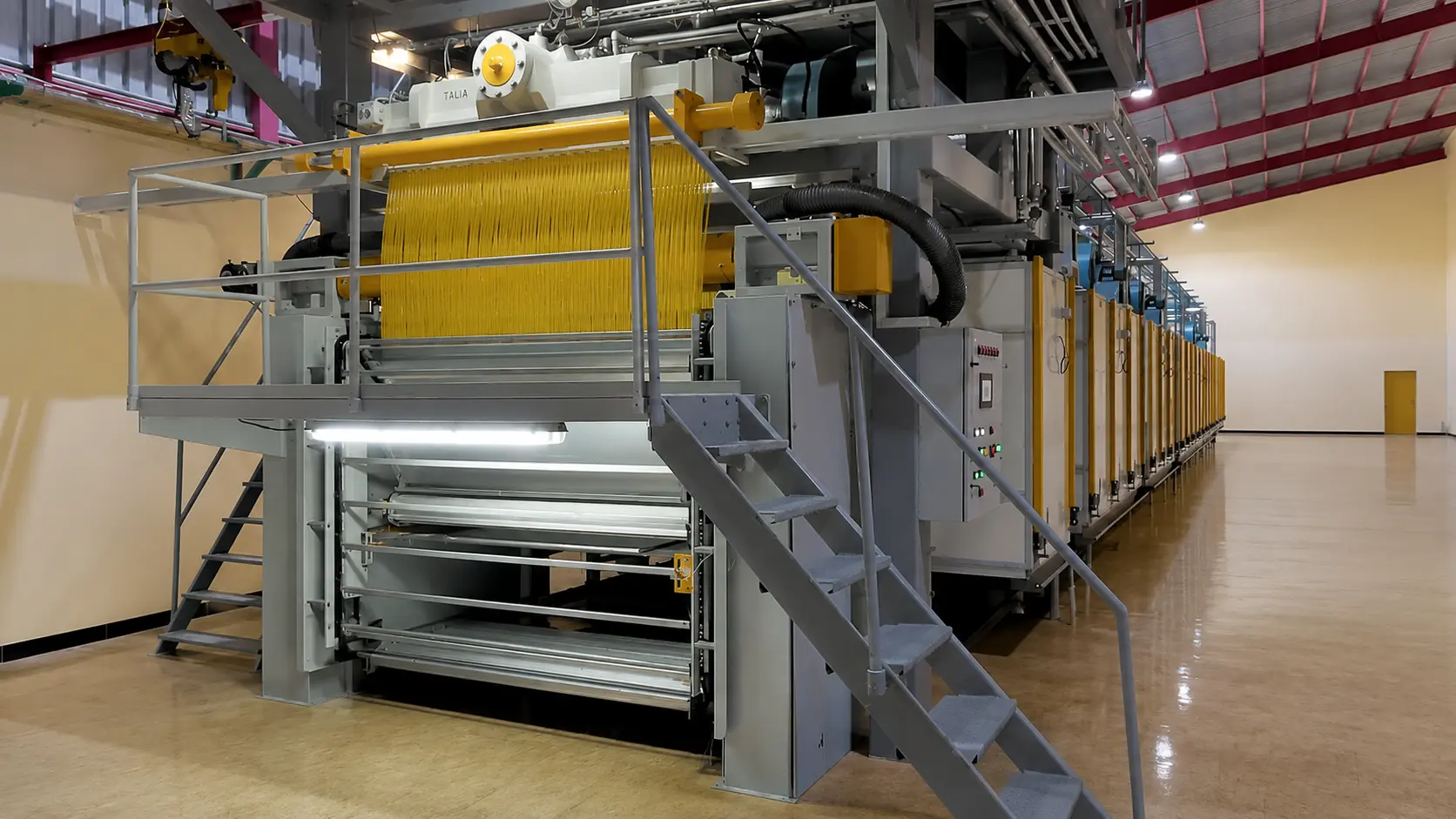 Installed Line View 2
 Installed Line View 3
Frequently Asked Questions
How is a pasta production line installed in Afghanistan?
Project planning, line design, manufacturing, shipment, site installation, commissioning and operator training are carried out turnkey from a single source. This full scope was applied in all three line installations in Afghanistan.
How was installation completed under challenging logistics?
For the landlocked geography and long shipping routes, shipment planning, border crossings and the site schedule were organised in advance; in all three projects, installation and commissioning were completed on the planned timeline.
Which pasta shapes are produced on the lines in Afghanistan?
The short-cut line produces penne cut, penne, square cut, fusilli, noodles, vermicelli, orzo, elbow and triple fusilli; the spaghetti lines produce spaghetti in 1.2 and 1.5 mm diameters. With circular die changes, more than 30 short-cut shapes can be produced on the same line.
What is the total capacity of the three lines?
With the 500 kg/h short-cut line and the 500 + 1,000 kg/h spaghetti lines, total installed capacity is 2,000 kg/h — theoretically up to 48 tonnes per day in 24-hour continuous operation.
Can a line be installed in a limited factory space?
Yes. In both factories in Afghanistan, line layouts were designed compactly around the existing building dimensions; press, drying and packaging equipment was positioned with space-specific engineering.
Do customers invest with Talia Makina more than once?
Yes. The producer that entered the market with a short-cut line in 2015 chose Talia Makina again in 2019 for a 1,000 kg/h spaghetti line after its products succeeded. Repeat investment is the most concrete indicator of line performance.
What capacity options are available?
Our short-cut lines can be installed from 300 kg/h up to 6,000 kg/h; spaghetti lines are configured in various capacities. In the Afghanistan projects, 500 and 1,000 kg/h were chosen.
What do the warranty and after-sales support cover?
All lines are delivered with a 24-month standard warranty. The turnkey scope includes commissioning, operator training, spare parts supply and after-sales technical support. Maintenance planning and service requests are handled by the Talia Makina technical team.
Is remote technical support available?
Yes. The Siemens PLC-based automation system supports remote connection; with authorised access, fault diagnosis, parameter optimisation and software updates can be done remotely, and on-site service is scheduled when needed.
Planning a pasta production line like the ones in Afghanistan?
Talk to our team about capacity selection and line layout.